
Blog · 11 Jun 2018 · Abhi Meer
DJ Laurent And The Birth Of The Goan Rave
…The drugs made a crucial difference too, argues Castle: ‘It wasn’t an Ecstasy scene in Goa, it really was an acid scene, which made the difference from a nightclub playing house music in Ibiza, London or New York. This was real acid disco.’
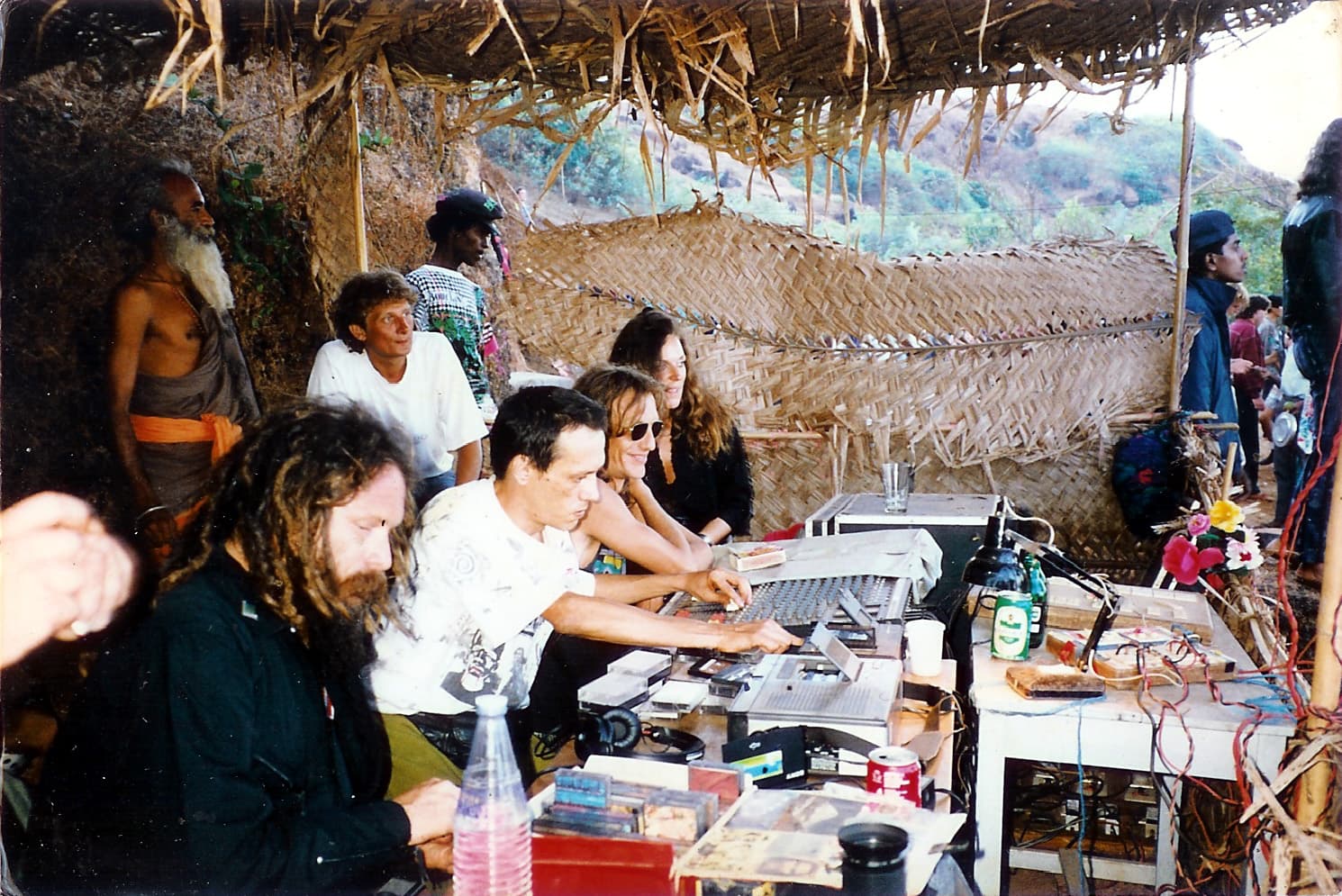
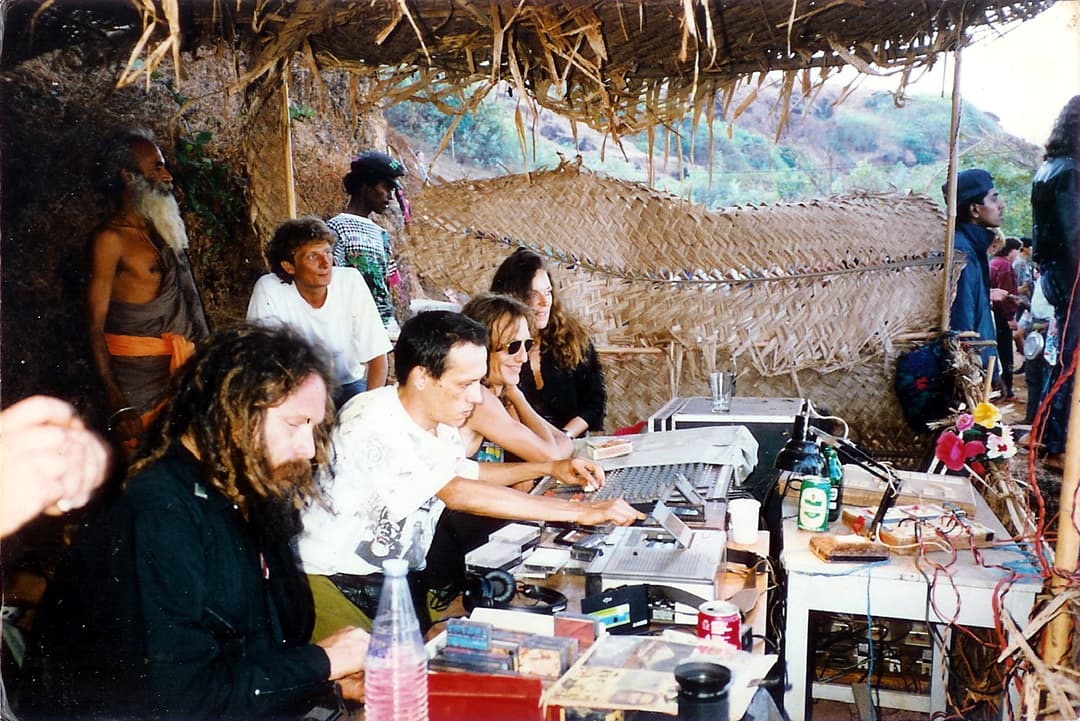
And the acid disco maestro was a self-effacing Frenchman known only as Laurent, who is said to have arrived in Goa in 1984 from Paris, where he had been doing parties on a barge on the Seine, then reportedly lost his return plane ticket and never went home. Laurent helped to define the new sound, setting some of the sonic parameters for what one day would become Goa trance. Mixing up everything from industrial funk to postpunk, electronic body music, Neue Deutsche Welle tracks, synth-pop and even a bit of Hi-NRG, he wove a psychedelic tapestry of sound, creating a night-long narrative out of disparate music in a similar way to what Alfredo in Ibiza, Larry Levan in New York and Ron Hardy in Chicago were doing at around the same time in the mid-eighties, although with different ingredients, influences and imperatives.
The music was played on twin cassette decks, and later on DAT The music was played on twin cassette decks, and later on DAT, because vinyl couldn’t survive the heat and the dust. Laurent would even re-edit tracks on the tape machines, cutting out vocals he didn’t like and rearranging sequences to extend instrumental passages, a bit like the Chicago house originators but with more low-tech equipment. His favourites came from the darker side of the spectrum – the Belgian powerstomp of Front 242, along with tracks by Yello, Cabaret Voltaire, DAF, Blancmange, Front Line Assembly and Sven V.th’s early releases as OFF, but also peculiar electro mixes of bands like Alien Sex Fiend and the Bollock Brothers – anything that he felt would enhance the trip.
‘Because of the drugs, the mind-blowing locations and the tribalistic nature of Goan beach parties, he could make tracks feel and sound different,’ wrote British DJ Dave Mothersole in a rare and evocative eyewitness account of the late-eighties Goa scene and the enigmatic Laurent. ‘Playing for anything up to ten hours at a time he would move from dark, hard hypnotic beats during the night, to sweet, uplifting, sun-kissed grooves in the morning. From Skinny Puppy and Nitzer Ebb to Koto and Laser Dance; from 100 to 150 BPM; from nightmare-ish and scary to blissed out and glorious.’
Castle calls the style ‘maverick space-groove invention’, and it went on to absorb the weirder elements of acid house, Belgian New Beat and Frankfurt trance, again in parallel to what DJs like Alfredo were doing in Ibiza but without the sunny pop vibe or the blacker influences of funk and soul.
Laurent quit DJing for unknown reasons around 1994 and retreated into obscurity, occasionally popping up on internet forums to post long lists of tracks from his Goa heyday, but never revealing his surname. In his only known interview, after he had already quit playing music and apparently taken up gambling to make a living, the reclusive innovator gave a brief and matter-of-fact explanation of how his sound sourced its magic: ‘Here you make parties for very heavy tripping people who have been travelling everywhere,’ he said. ‘You have to take drugs to understand the scene here, what people are thinking.’
‘Laurent is a very distinguished legend but a very modest character; he only did it for free, it wasn’t a commercial thing for him,’ explains Castle. ‘But he wasn’t the only one. There were basically just a whole lot of fanatics who would search these unique pieces of music down, record them on tapes and bring them to Goa and then everybody would copy all this stuff.’
The music would be sequenced to trace the contours of a trip, getting stranger and more intense as the night deepened. Some of the more sensitive acidheads were sometimes freaked out by the sonic FX of ‘car crashes, people screaming, glass shattering, machines guns and explosions, beasts and monsters roaring’, according to another veteran Goa DJ from the US who went by the name of Chicago. But as the sun rose, the mood elevated into rapture: ‘We all remember crying in front of the speakers, tears of joy, with goosebumps, shivers… ecstasy – a strong feeling of oneness and togetherness with each other and the magnificent nature surrounding us,’ he recalled.
For Castle, this was all the result of sonic and chemical experimentation at a unique moment in cultural history that could not be repeated: ‘It was a kind of movie soundtrack for you to have your trip in. It wasn’t perfectly mixed music because it was off tapes, but it was mystical, exotic and evocative,’ he says. ‘We were in India, this mystical ancient culture, but we were listening to this high-tech industrial cutting-edge music. And no one had any idea this was going on.’
But they soon found out. Acid house and the rave scene brought a new wave of travellers to Goa, and they were not backpacking along the hippie trail and through the Hindu Kush any more, they were arriving by plane – although they were, in their own way, trying to lose themselves in order to find themselves, just as the hippies had done. For the ravers who embarked upon a spiritual quest after Ecstasy opened up questions in their minds that Western consumerism could not answer, Goa seemed a logical destination. But the world had shrunk and India had modernised since the sixties; now it was much easier and required less commitment to make the same cross-the-world trek that Gil had done 20 years earlier.
Among those who arrived were musicians like Sven Väth, who recorded some Goa atmospheres for his 1992 Accident in Paradise album and would develop the Frankfurt trance style with his Eye Q label. The ‘Back from Goa’ mix of his track ‘No Fate’, with its multiple layers of chattering 303s, didgeridoo and sitar effects, was his tribute to the fullmoon parties. ‘The Goa sound is a very special deep trance,’ Väth said at the time. ‘It’s a serious thing. These people are not kids, this music is a part of their lives.’
Even more significantly for the scene’s future, former Killing Joke bassist turned ambient house record producer Martin Glover, alias Youth, a collaborator with Alex Paterson of The Orb, also took a trip to Goa. Youth was captivated by the style that had been developed by Laurent and the other full-moon DJs: ‘You’d see them under a cloud of dust mixing from two cassette decks. I’ve never had anyone blow my mind like that guy [Laurent],’ he said. He identified the Goa scene as part of a countercultural continuum stretching deep into the past: ‘It’s not just a place, it’s a state of mind and it’s an old tradition which goes back to the Stonehenge free parties, the beatniks of the early sixties, the poets, the first acid technicolour parties of the sixties, the poets and artists of twenties Paris, it’s an ancient timeless tradition going back to the Eleusinian mysteries and magick and all that,’ he insisted.
After returning to London, Youth started making music with other Goa converts, tracks that were purpose-built for the parties on the Arabian Sea shore: bubbling cyborg acid lines, portentous riffs and squibbles of melody like electronic calligraphy over a strident, elementary beat, with sampled snippets of voices delivering otherworldly messages. Goa trance was born.
The Goa trance style was pioneered by Youth’s label Dragonfly, which he set up in 1993, and by TIP Records, which was co-founded by Raja Ram, the former flautist with psychedelic rock band Quintessence, and Ian St Paul, an Ibiza veteran from the Amnesia eighties who had previously run the seminal acid house club Spectrum with Paul Oakenfold. To DJs like Oakenfold and Danny Rampling, who also championed the new style in their broadcasts for BBC Radio 1 and put together the pioneering mix CD A Voyage Into Trance for Dragonfly, the early Goa trance tracks by The Infinity Project, Hallucinogen, Man With No Name and Total Eclipse sounded like an exciting break from the nightclub orthodoxies of the time. Indeed, it felt like acid house all over again, but this time with a lot more acid. Goa veterans also started to do parties in southern England using the aesthetics they had brought back from their trips to India: fluorescent décor, psychedelic imagery, black lights and prodigious doses of LSD.
But in Goa itself, as increasing numbers of raving tourists joined the old time trippers on the beaches during the winter season, intrigued by the tales of this tropical paradise which were now being reported by the European pop media and promoted by DJs like Oakenfold, Rampling and Väth, the scene started to creak under the pressures of its own popularity.
‘Before it was only for people who used to travel to India looking for magic, going there to find themselves through gurus or meditation or yoga. Goa was under the radar. Not a lot of people knew about it and the parties were just for a few hundred people. They were free and the cops would not really hassle them too much,’ says Ray Castle. ‘But it all got out of hand in the nineties after Goa became a musical genre, and all of a sudden it was on the radar and the parties and sound systems got bigger but so did the problems with the authorities and the cops.’
The number of foreign tourists arriving in Goa more than doubled between 1985 and 1995 – and would double again in the decade that followed – meaning that very soon it was no longer a clandestine freak enclave. A curfew was imposed on all-night open-air raves, the police stepped up drug busts and shakedowns for bribes, and local bar owners started to take over control of the party scene from the hippies. As with the expansion of Ibiza’s clubs and the development of touristic infrastructure when increasing numbers of ravers joined the party on the Balearic island, the creeping commercialisation of Goa began to dilute its hippie essence. The Ibiza scene would mutate and survive, but the Goa veterans found the changes difficult to endure.
When thejournalist Erik Davis published his captivating report about ‘the technofreak legacy of golden Goa’ in 1995, it already seemed like an elegy for what had been lost. ‘We came here so long ago,’ Goa Gil told Davis dejectedly. ‘It was like the end of the world. And now the whole world is at our doorstep. The communications lines are open. Where do we go from here?’
The excerpt above is from the recently published book Rave On: Global Adventures In Electronic Dance Music by Matthew Collin, available here via Serpent's Tail Books.